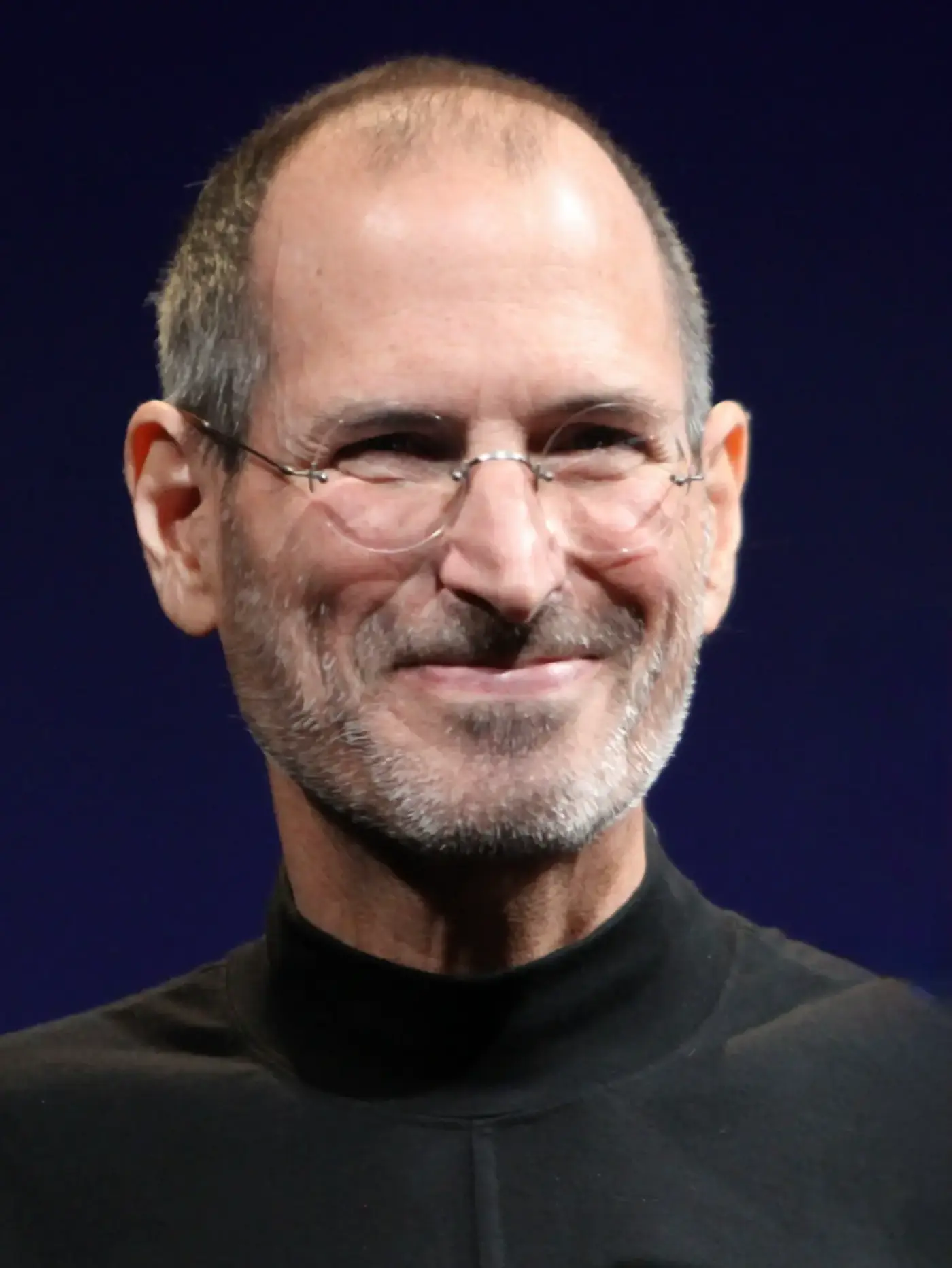
Founder · United States
Steve Jobs
He dropped out of college after six months, was pushed out of his own company at 30, and came back 12 years later to save it from near bankruptcy.
01 / At a glance
- Born
- 24 February 1955, San Francisco; adopted, raised in Mountain View and Los Altos
- Died
- 5 October 2011, Palo Alto, aged 56
- Education
- Reed College, Portland; dropped out after six months (1972)
- Early job
- Technician at Atari, from 1974 (after a summer job at HP at 13)
- Founded
- Apple, 1 April 1976, with Steve Wozniak and Ronald Wayne; NeXT, 1985
- Seed money
- He sold his VW van; Wozniak sold his HP calculator
- Out of Apple
- Resigned 17 September 1985, aged 30
- Back at Apple
- Returned 1997 when Apple bought NeXT; interim CEO from 16 September 1997
- Built or launched
- Apple II, Macintosh, Toy Story (via Pixar), iMac, iPod, iPhone, iPad
- The question his life answers
- What do you do when the company you started throws you out?
01 / Where he came from
- Born on 24 February 1955 in San Francisco and put up for adoption.[1]
- He was adopted by Paul Jobs, a high-school dropout who worked as a machinist and repossession agent, and Clara, a bookkeeper. His birth mother wanted college graduates and only signed the final papers when they promised he would go to college.[1][2]
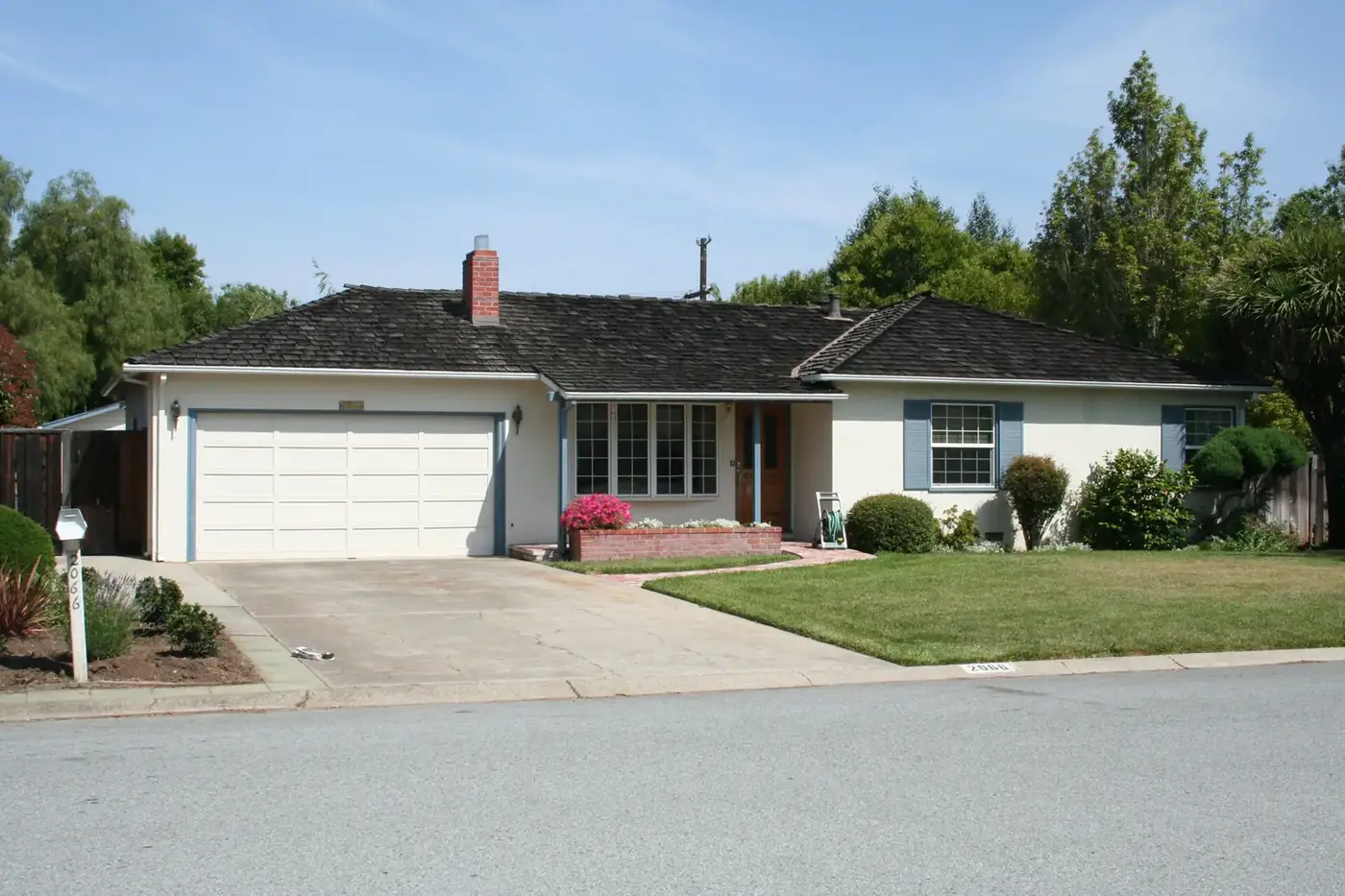
- The family was not well off. They spent all their savings on a house on Crist Drive in Los Altos in 1967 so he could change schools.[1]
- At 13 he cold-called Bill Hewlett of Hewlett-Packard to ask for parts and was given a summer job.[1]
- With Steve Wozniak he sold illegal "blue boxes" for free long-distance calls. He later said that without them "there wouldn't have been an Apple".[1]
02 / Dropping out and paying the bills
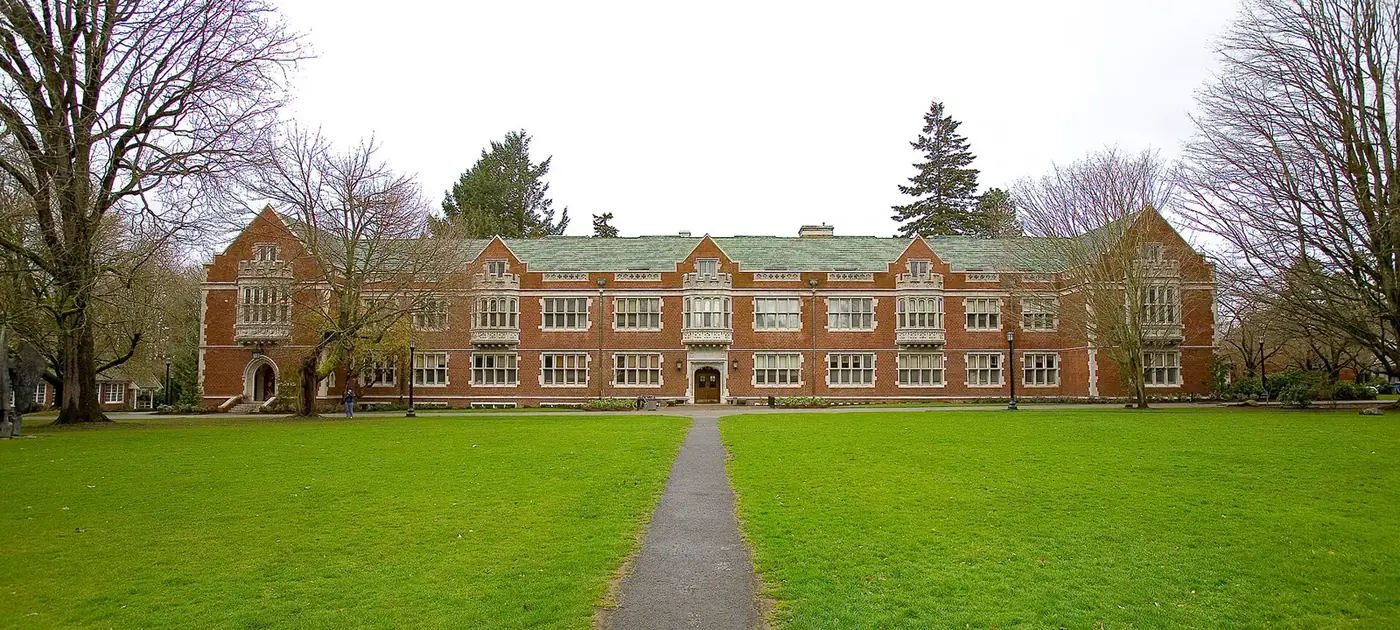
- He went to Reed College in 1972. "All of my working class parents' savings were being spent on my college tuition," he said later. He dropped out after six months.[1][2]
- He stayed on and audited classes, including calligraphy. He later said that class is why the Macintosh had multiple typefaces and proportionally spaced fonts.[1][2]
- "I returned Coke bottles for the five-cent deposits to buy food with. And I would walk the seven miles across town every Sunday night to get one good meal a week at the Hare Krishna temple."[2]
- He moved back home in February 1974 and was soon hired by Atari as a technician. In mid-1974 he left for seven months in India.[1]
- In 1975 Atari had him build the Breakout game board, and Wozniak did much of the design. According to Wozniak, Jobs told him Atari paid $750, not the actual $5,000, and he only learned the truth ten years later.[1]
03 / Starting Apple with a van and a calculator
- He, Wozniak and Ronald Wayne started Apple on 1 April 1976, at his parents' Crist Drive home.[1]
- To pay for the first batch, Wozniak sold his HP calculator and Jobs sold his Volkswagen van.[1]
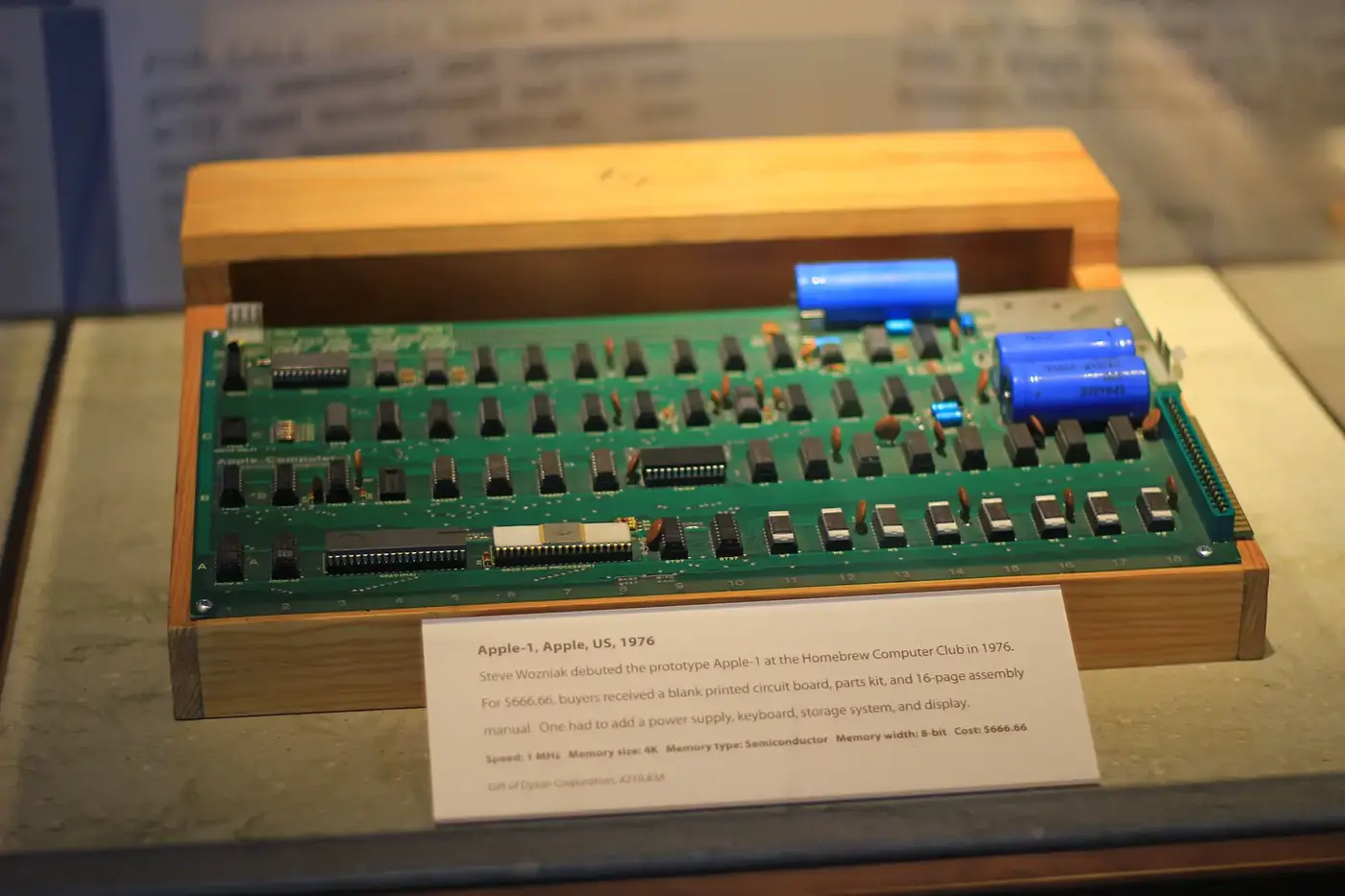
- A shop owner, Paul Terrell, bought 50 assembled Apple I computers at $500 each. About 200 were made in total.[1]
- Mike Markkula, a semi-retired Intel manager, put in money. The Apple II followed in 1977, and Apple went public on 12 December 1980.[1][4]
- "In ten years Apple had grown from just the two of us in a garage into a $2 billion company with over 4,000 employees."[2]
04 / Thrown out at 30
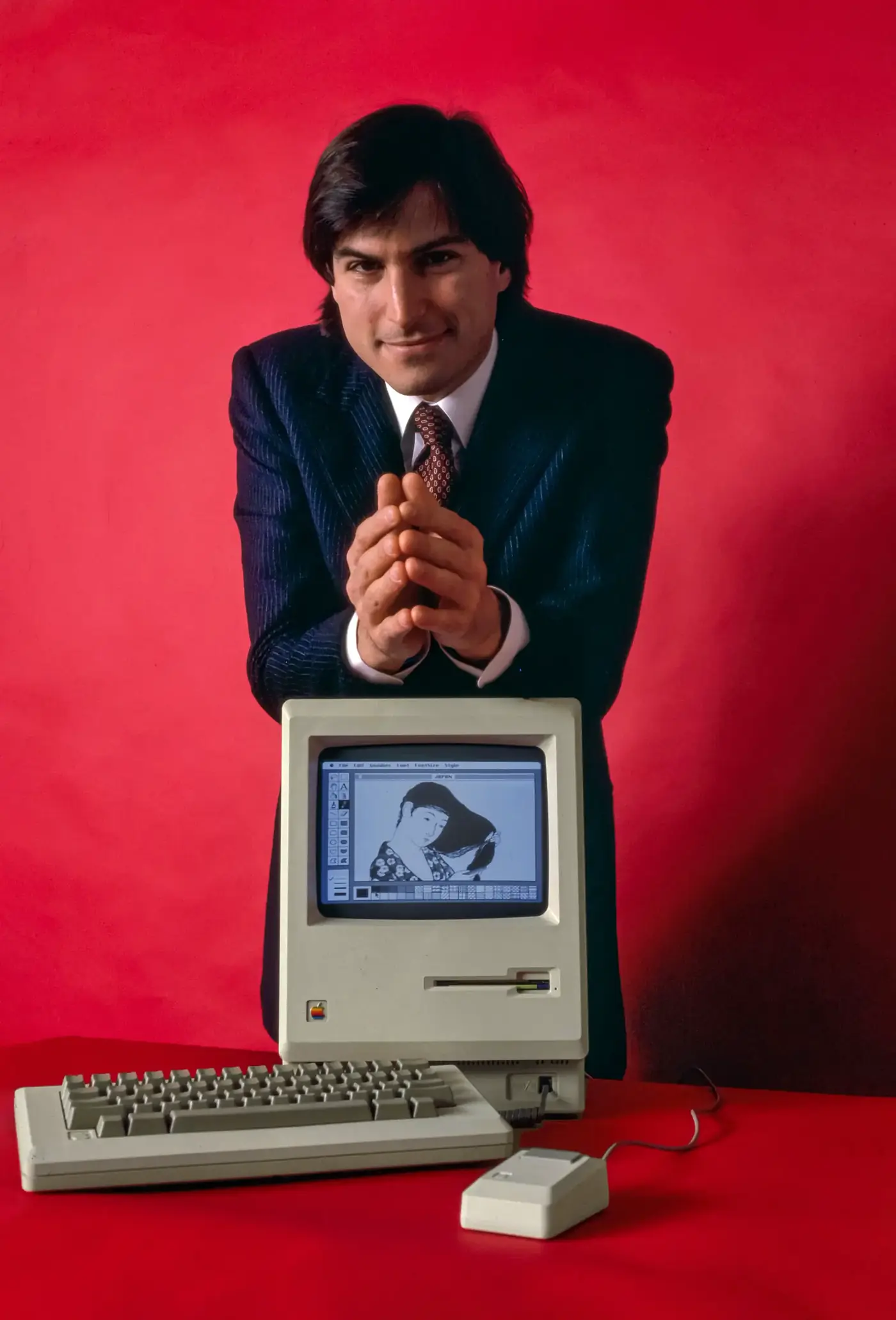
- In 1983 he hired John Sculley from Pepsi: "Do you want to spend the rest of your life selling sugared water, or do you want a chance to change the world?"[1]
- The Macintosh launched in 1984. By early 1985 it was clear it had not beaten the IBM PC.[1]
- In May 1985 Sculley moved to take him off the Macintosh group. On 17 September 1985 he resigned.[1]
- "And so at 30 I was out, and very publicly out." Later in the same speech: "I was a very public failure, and I even thought about running away from the Valley."[2]
- What kept him going: "I still loved what I did."[2]
05 / The wilderness years: NeXT and Pixar
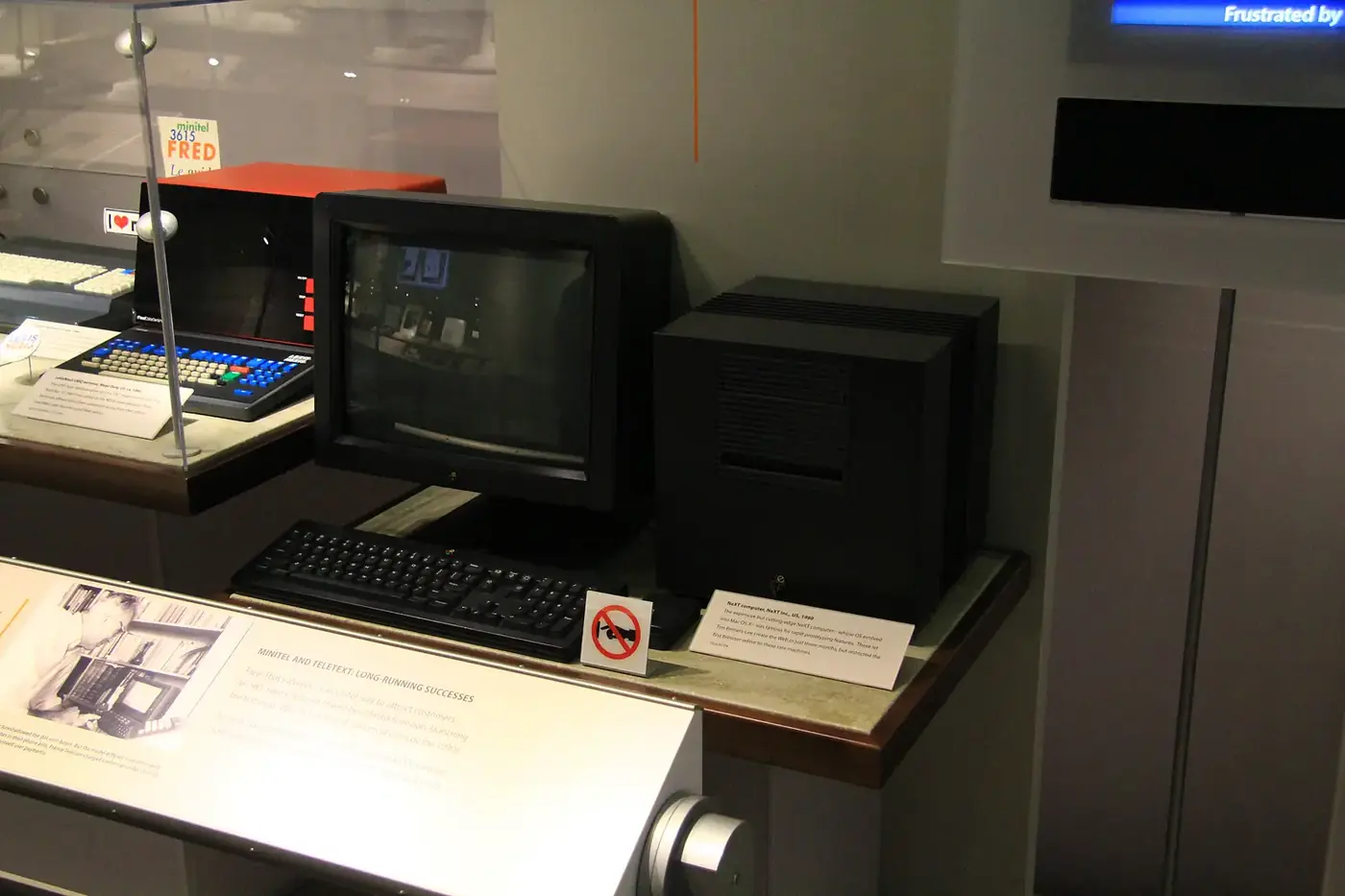
- He started NeXT with $7 million. A year later it was running out of money, with no product yet. Ross Perot invested.[1]
- The NeXT workstation cost $9,999 and sold only 50,000 machines. In 1993 NeXT stopped making hardware and went software-only. Its first profit, $1.03 million, came in 1994.[1][3]
- In 1986 he paid $10 million for the computer graphics group that became Pixar. Toy Story came out in 1995. Disney bought Pixar for $7.4 billion in 2006.[1]
- His later view: "getting fired from Apple was the best thing that could have ever happened to me."[2]
06 / Coming back to save Apple
- By 1996 Apple was struggling, and its survival depended on a new operating system. In December it agreed to buy NeXT for $400 million; the deal closed in February 1997 and brought Jobs back. Apple was then on the verge of bankruptcy.[1]
- He became interim CEO on 16 September 1997. That August he had secured a $150 million investment from Microsoft.[1][5]
- In March 1998 he shut down projects including the Newton so Apple could focus on getting back to profit.[1]
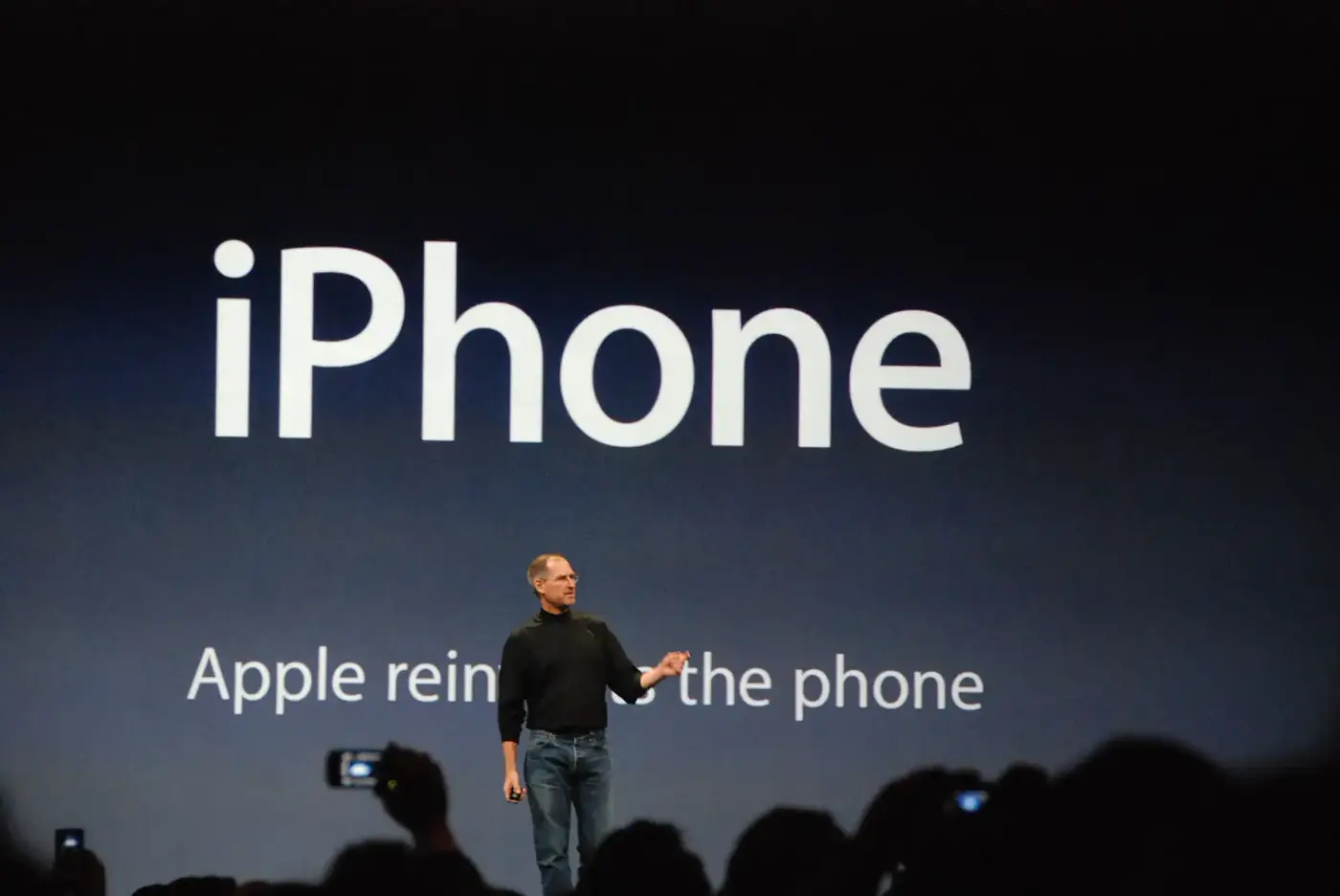
- Then came the iMac, iPod and, in June 2007, the iPhone.[1]
- Diagnosed with a pancreatic tumour in 2003, he put off surgery for nine months. His biographer Walter Isaacson says he later regretted it. He died on 5 October 2011.[1]
Lessons
- Take the small job in front of you. Before Apple he had a summer job at HP and worked as a technician at Atari.
- Learn things that seem useless. A calligraphy class he audited ended up in the Mac's fonts. "You can't connect the dots looking forward."
- Losing your job is not the end of your work. He spent the next 11 years building NeXT and Pixar.
- When the money is running out, cut hard. Back at Apple he shut down projects so the company could focus.
- Be straight with your partners. Wozniak says Jobs hid the real Breakout payment from him, and that is the part of the story worth not copying.
Read more
Key sources
Watch
Steve Jobs' 2005 Stanford Commencement Address
Stanford
His 2005 Stanford speech: dropping out, getting fired from Apple, facing death.
Watch on YouTubeA 28-year-old Steve Jobs gives a talk at the 1983 International Design Conference in Aspen
Steve Jobs Archive
Jobs at 28 speaking at the 1983 International Design Conference in Aspen. From the official Steve Jobs Archive.
Watch on YouTubeBuilding NeXT from the Ground Up - Steve Jobs on Vision and Survival, 1986
Steve Jobs Archive
Jobs in 1986 on building NeXT. From the official Steve Jobs Archive.
Watch on YouTubeFrom the 60 Minutes Archive: Steve Jobs
60 Minutes
60 Minutes archive segment on Jobs.
Watch on YouTubeSteve Jobs and the Apple story - From rebel to tech titan | DW Documentary
DW Documentary
DW documentary on his life, from rebel to tech titan.
Watch on YouTube